
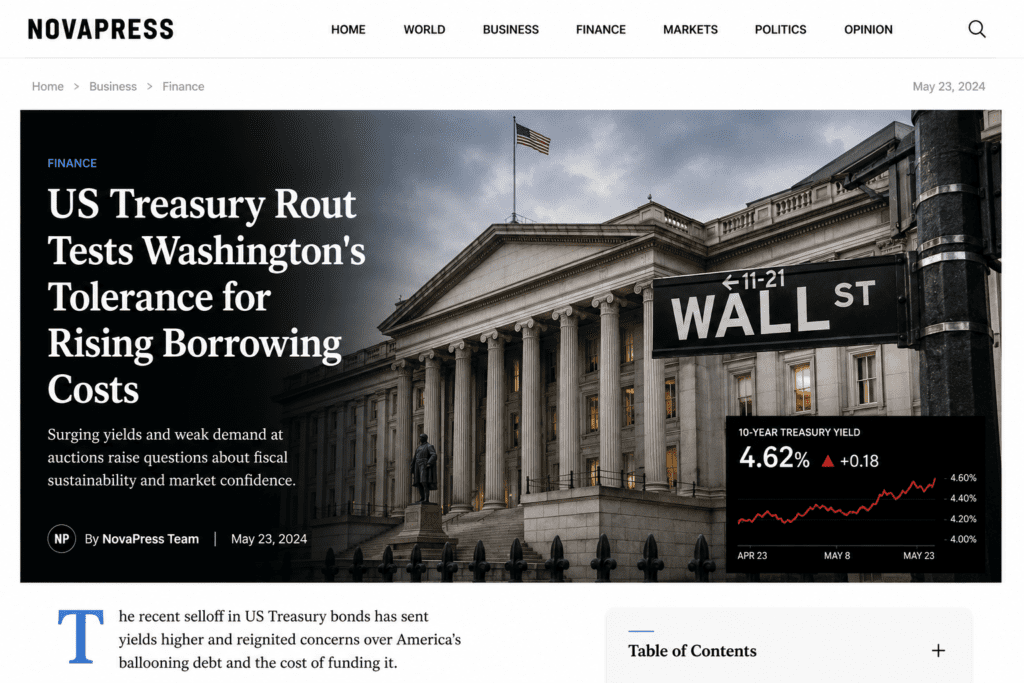
US Treasury Rout Tests Washington’s Tolerance for Rising Borrowing Costs
*The recent volatility in US Treasury yields poses critical questions for fiscal policy and economic stability.*
Turbulence in the US Treasury market has unveiled challenges for Washington as it grapples with the implications of rising borrowing costs. The recent sell-off in Treasuries has led to a notable increase in yields, sparking concerns about the sustainability of federal debt and the potential repercussions on the broader economy. This situation has forced policymakers to reconsider their fiscal strategies and assess the impact of higher interest rates on economic growth and public finances.
Treasury Market Volatility
The US Treasury market, a cornerstone of global finance, has recently experienced significant volatility. This has been driven by a combination of investor sentiment, economic indicators, and geopolitical tensions. As yields rise, the cost of borrowing increases, creating a ripple effect across various sectors of the economy.
Recent data indicates that the yield on the 10-year Treasury note has reached levels not seen in several years, highlighting the market’s reaction to anticipated Federal Reserve actions and inflation expectations. The Federal Reserve’s efforts to combat inflation through tighter monetary policy have contributed to this environment, as investors adjust their portfolios in response to anticipated rate hikes.
Impact on Federal Borrowing
As borrowing costs rise, the federal government faces higher interest expenses, complicating budgetary considerations. The Congressional Budget Office has warned that sustained high yields could significantly increase the cost of servicing the national debt, which currently exceeds $30 trillion.
Efforts to manage this burden will require careful fiscal planning and may necessitate shifts in spending priorities. Lawmakers are considering various strategies to address these challenges, including potential reforms to entitlement programs and adjustments to tax policy. However, political gridlock remains a significant obstacle to decisive action.
Economic and Policy Implications
The rise in borrowing costs has broader implications for the US economy. Higher interest rates can dampen consumer spending and business investment, slowing economic growth. This presents a dilemma for policymakers, who must balance the need to control inflation with the risks of stifling economic activity.
Furthermore, rising yields on Treasuries have implications for global markets, as they influence the cost of capital worldwide. Countries with significant exposure to US debt may face increased financial pressure, potentially leading to broader economic instability.
Strategic Considerations for Policymakers
Washington’s approach to managing higher borrowing costs will require a multifaceted strategy. Policymakers must consider both short-term responses and long-term structural reforms to address the underlying causes of fiscal imbalance.
Short-term measures may include adjustments to the issuance of debt securities and targeted fiscal interventions to stabilize markets. Over the long term, restructuring entitlement programs and pursuing tax reforms could help address the sustainability of federal finances.
“The recent sell-off in Treasuries has led to a notable increase in yields, sparking concerns about the sustainability of federal debt.”
James Mercer, Geopolitical Risk Analyst
Increased Fiscal Pressure
Sustained high yields will exert pressure on federal budgets, prompting potential policy shifts.
70%
The recent volatility in the US Treasury market serves as a critical test for Washington’s fiscal strategy. As borrowing costs rise, the government faces increased pressure to manage its debt effectively while ensuring economic stability. Policymakers must adopt a balanced approach, addressing immediate market concerns while implementing long-term reforms to enhance fiscal sustainability. This will likely involve difficult political decisions, including potential adjustments to spending and tax policies. The outcome of these efforts will have significant implications not only for the US economy but also for global financial markets.
SOURCES
- 1. The Wall Street Journal — https://www.wsj.com
- 2. Bloomberg — https://www.bloomberg.com
- 3. Reuters — https://www.reuters.com
- 4. Financial Times — https://www.ft.com