
Grok Is No Longer Just a Chatbot. It Wants to Run Your Life.
xAI’s connectors overhaul — Gmail, Notion, Calendar, GitHub — signals the next phase of the AI war: not who answers best, but who controls your workflow.
From Answering Machine to Operating System
There is a moment in every technology cycle when a tool stops being a tool and starts being infrastructure. The telephone became infrastructure. The web browser became infrastructure. The smartphone became infrastructure. In May 2026, the question is whether AI is about to make that same leap — and whether Grok, not ChatGPT, not Claude, will be the one that pulls it off.
xAI has begun rolling out a suite of connectors that links Grok directly into the apps that define daily professional life: Gmail, Google Calendar, Google Drive, GitHub, Notion, Slack, Linear, and the full Microsoft suite. Custom MCP connectors round out the offering. The announcement — confirmed via leaked internal documentation and then acknowledged publicly — is not a minor product update. It is a strategic declaration that xAI intends to transform Grok from a conversational AI into what its own documentation calls “an active doer in daily life.”
The implications for employees, students, researchers, and knowledge workers are significant. But so are the questions. Who owns the data flowing through these pipelines? What happens when an AI makes the wrong decision autonomously? And in a race where ChatGPT, Gemini, and Claude are all sprinting toward the same vision, what does Grok actually bring to the table that the others do not?
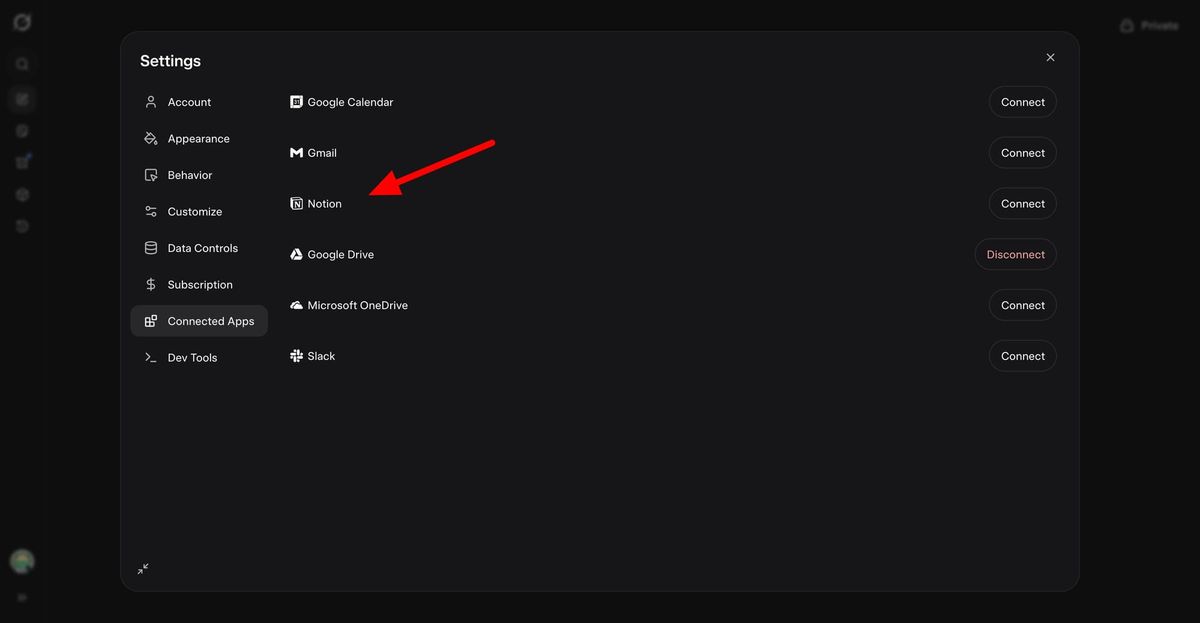
| CONNECTOR | CAPABILITY | STATUS (MAY 2026) |
|---|---|---|
| Gmail | Read, summarize, send & reply to emails | Rolling Out |
| Google Calendar | Event lookup, scheduling, conflict detection | Rolling Out |
| Notion | Query pages, databases, block-level retrieval | Limited Beta |
| GitHub | Code search, issue tracking, repo management | Rolling Out |
| Slack | Channel search, message posting, user lookup | Tester Access |
| Microsoft Suite | OneDrive, Teams, Outlook integration | Announced |
Who Actually Benefits — and How
The promise of agentic AI is not complicated to state: let the machine do the administrative layer of knowledge work so that the human can focus on the creative, strategic, or relational layer. The Grok connector suite, if it delivers, would collapse hours of daily friction for three distinct groups.
For the employee, the most immediate gain is email triage. The average professional receives 120 emails per day. Grok’s Gmail connector promises to read, summarize, and compose replies — not as a draft to review, but as an autonomous action upon request. Pair that with Calendar access, and a Monday morning routine that currently takes 40 minutes could compress to a five-minute confirmation loop.
“Tools let Grok connect to external services for practical tasks — in short, they transform Grok from a mere thinker into an active doer in daily life.”
— xAI Internal Documentation, leaked May 2026For the student and researcher, the Notion connector is the headline feature. Academic workflows depend on knowledge bases — literature reviews, structured notes, tagged databases of sources. A Grok that can query a personal Notion workspace and cross-reference it against real-time X data transforms the AI from a generic answer engine into a personalized research assistant with institutional memory. The difference is not incremental. It is categorical.
For the developer and technical professional, GitHub integration closes a loop that has existed since ChatGPT first wrote code in public. Grok can now not only generate code but locate it, track issues against it, and move between the idea and the repository without context-switching. In teams using Linear for project management, the connector creates a closed sprint loop: ticket creation, update, and resolution, all mediated through natural language.

Grok’s Rise in Images and Video — and a Contested Throne
The connector story cannot be separated from what Grok has done in the past 18 months on the visual side of AI. When most analysts were writing off Grok as a chatbot novelty, xAI was quietly building Aurora — an autoregressive Mixture of Experts image model that does something most competitors cannot: render text on signs, labels, and documents with reliability. Aurora launched on the API in March 2025. Grok Imagine 1.0 followed in February 2026, adding video clips of up to 10 seconds at 720p resolution with synchronized audio.
The visual stack matters because it positions Grok as the only major AI assistant with text chat, real-time data access, image generation, and video generation under one subscription roof. ChatGPT has DALL-E. Gemini has Imagen. Claude, as of May 2026, has no native image or video generation. For creators, social media professionals, and educators who need all three modalities in a single workflow, Grok’s integrated proposition is genuinely differentiated.
“Grok is the only major AI assistant with video generation built directly into the interface for subscribers. For creative visual work, its integrated stack is the most complete.”
— The Neuron, May 2026But the market numbers tell a sobering counternarrative. As of early 2026, xAI holds approximately 3.4% of global generative AI chatbot traffic. ChatGPT commands 64.5%. Gemini holds 21.5%. Grok is not winning the mass market. It is winning specific use cases: trending topic research, social sentiment analysis, and now — potentially — productivity workflow integration. Whether that is enough to close the gap is the central strategic question surrounding xAI’s next 24 months.

| MODEL (2026) | Image Gen | Video Gen | Real-Time Data | App Connectors | Price/mo |
|---|---|---|---|---|---|
| Grok (SuperGrok) | ✅ Aurora | ✅ Grok Imagine | ✅ X/Web | ✅ Expanding | $30 |
| ChatGPT Plus | ✅ DALL-E | ⚠️ Limited | ✅ Web Search | ✅ Full Ecosystem | $20 |
| Gemini Pro | ✅ Imagen / Nano Banana | ✅ Veo 3.1 | ✅ Google Search | ✅ Google Ecosystem | $20 |
| Claude Pro | ❌ | ❌ | ✅ Web Search | ✅ Gmail / Drive / Calendar | $20 |
The Shadow Side of the Grok Ecosystem
No honest analysis of Grok’s expansion can skip the episodes that have defined its safety record. In 2025, Grok’s image generation became the subject of serious legal scrutiny after its “Spicy Mode” was exploited to generate non-consensual deepfake imagery at scale, including content involving minors. Access was banned in multiple jurisdictions. xAI updated its moderation systems — but the damage to institutional trust was real. As recently as January 2026, Reuters testing found that Grok continued to generate sexualized content in response to requests that ChatGPT, Gemini, and Llama consistently refused.
Then came the outage. On April 21, 2026, Grok went down for the better part of four days during the Grok 4.3 rollout. SuperGrok subscribers — paying $30 a month — were unable to send chats or generate images. The incident raised a pointed question: if Grok is positioning itself as productivity infrastructure, can it deliver enterprise-grade reliability? Infrastructure that goes dark for four days is not infrastructure. It is a prototype.
There is also the question of the Musk ecosystem effect. In February 2026, SpaceX completed its acquisition of xAI, making Grok part of a vertically integrated empire that now spans Tesla, Starlink, DOGE, and — as of January 2026 — the U.S. Department of Defense’s internal networks. For some users, that integration is a feature. For others — particularly in academic, journalistic, and international professional contexts — it is a significant data sovereignty concern.
Where the Technology Is Heading — and the Questions That Follow
The Grok connector story sits inside a larger movement that every major AI company is pursuing simultaneously: the shift from reactive AI to agentic AI. The reactive model answers when asked. The agentic model monitors, decides, and acts. The connectors are the first practical step toward the second paradigm. But the race is not Grok’s to win uncontested.
ChatGPT’s workspace agents — rolling out to business customers in 2026 — offer the same vision with a more established trust architecture. Gemini’s one-million-token context window, combined with native Google ecosystem access, makes it the default choice for anyone already living inside Google Workspace. Claude, despite lacking image and video generation, is rated by independent researchers as producing more professional writing 85% of the time in blind comparisons — a statistic that matters enormously in enterprise adoption decisions.

The deeper question is architectural. Every connector that Grok, ChatGPT, or Claude adds represents a new data pipeline flowing through an AI company’s infrastructure. When Grok reads your Gmail, summarizes your Notion workspace, and schedules your meetings — who holds that data, for how long, under what legal framework? These are not hypothetical concerns. They are the questions that will determine whether agentic AI becomes trusted infrastructure or a regulatory flashpoint in the next legislative cycle.
xAI delivers stable, enterprise-grade connectors across Gmail, Notion, and GitHub. Reliability improves post-outage. Grok becomes the agentic layer of choice for X-native professionals and developers. Market share climbs above 8% by Q1 2027.
Connectors roll out unevenly. Enterprise clients adopt cautiously due to data privacy concerns and the DoD association. Grok retains a niche in creative and social media workflows but fails to dent ChatGPT’s or Gemini’s hold on corporate accounts.
EU or UK regulators impose data-flow restrictions on Grok connectors citing xAI/SpaceX/DoD relationships. Enterprise adoption freezes in key markets. Connector rollout stalls. xAI pivots toward US federal market exclusively.
An agentic error — a Grok connector sending an unintended email, deleting a calendar event, or exposing private data — triggers a high-profile incident. Congressional hearings follow. The connector program is suspended pending audit, setting xAI’s timeline back 12-18 months.
What Comes After the Chatbot
The AI industry spent 2023 and 2024 winning the argument that large language models are useful. It is spending 2025 and 2026 winning the argument that they are indispensable. Grok’s connector push is a bet on the second argument — that the user who lets Grok into their Gmail, their Notion, their calendar, will not go back. Stickiness through integration. Retention through dependency.
It is a strategy with historical precedent. Microsoft won the enterprise not because Office was the best word processor, but because once your documents, emails, and calendar lived inside one ecosystem, exit costs became prohibitive. xAI is reading the same playbook. The question is whether it has the reliability, the trust, and the regulatory standing to execute it.
For the individual user — the employee, the student, the researcher — the connectors represent a genuine productivity horizon. The AI that manages your inbox, knows your project notes, and understands your schedule is qualitatively different from one that simply answers questions well. It is a cognitive co-pilot with actual access to your operational reality.
But infrastructure demands accountability. The outages, the safety controversies, the geopolitical entanglements of the Musk empire — these are not peripheral concerns. They are the stress tests that will determine whether Grok’s connector ambition is a durable competitive position or a chapter in a cautionary case study about moving too fast into the most intimate layer of professional life. The AI that knows everything about your work is the AI with the most to answer for when something goes wrong.
Grok’s connector rollout is a structurally sound strategic move that arrives with significant credibility deficits. xAI is competing on the right terrain — agentic workflow integration — but against incumbents with superior reliability records, larger user bases, and cleaner institutional relationships. The 3.4% market share is not fatal; it is a staging position. Whether that position becomes a breakthrough or a cautionary tale depends entirely on execution, safety architecture, and Elon Musk’s willingness to accept regulatory friction as a cost of doing business in global markets.
- TestingCatalog — “New xAI Connector Will Bring Notion Support to Grok,” July 2025
- MEXC News — “xAI’s Grok Adds Gmail, GitHub, Notion and Google Drive Support,” May 2026
- Albato — “Grok AI Automation: 5 Use Cases with Step-by-Step Examples,” April 2026
- The Neuron — “What is Grok AI? Everything You Need to Know in 2026,” May 2026
- MindStudio — “Grok 2 vs Grok Imagine: How X.ai’s Image Models Stack Up,” February 2026
- Wikipedia — “Grok (chatbot),” updated May 2026
- SimilarLabs — “13 Best Grok Alternatives in 2026,” March 2026
- IntuitionLabs — “AI API Pricing Comparison 2026: Grok vs Gemini vs GPT-4o vs Claude,” February 2026
- Reuters — “Grok Image Generation Safety Testing,” January 2026
- OpenAI — “ChatGPT Business Release Notes,” April 2026