
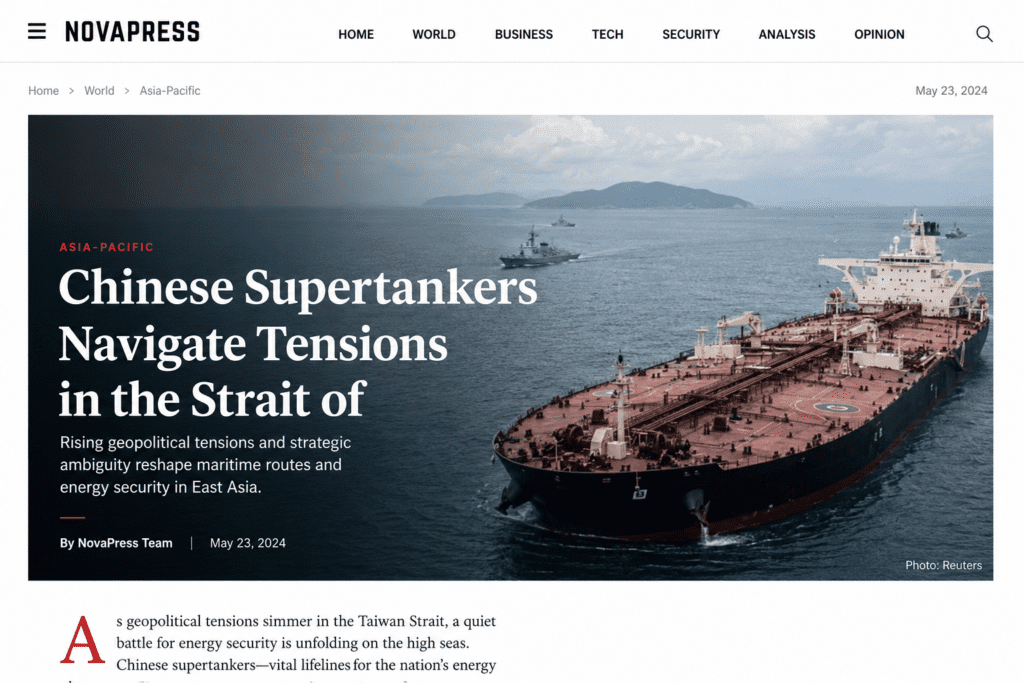
Chinese Supertankers Navigate Tensions in the Strait of Hormuz
*The exit of Chinese oil supertankers from Hormuz may signal shifting geopolitical dynamics*
Tensions around the Strait of Hormuz have eased momentarily as two Chinese supertankers, carrying an estimated 4 million barrels of crude oil, successfully navigated the narrow waterway. The strategic passage, often at the center of international geopolitical friction, serves as a critical choke point for global oil transportation. Recent developments suggest potential easing of regional tensions, impacting global oil markets and diplomatic relations.
Geopolitical Context and Recent Developments
The Strait of Hormuz, a vital corridor linking the Persian Gulf with the Gulf of Oman and the Arabian Sea, is a pivotal maritime passage through which approximately 20% of the world’s petroleum passes. The strategic significance of Hormuz is underscored by its role in global energy security and its vulnerability to regional tensions.
Recent months have witnessed heightened tensions in the region, primarily involving the United States, Iran, and other Gulf nations. Notably, a blockade enforced by the United States on Iranian ports has been a key element of these tensions. According to Bloomberg, the recent exit of Chinese supertankers from Hormuz comes amidst this backdrop of geopolitical strain, as the vessels navigate waters closely monitored by U.S. naval forces [2].
The passage of the tankers coincides with diplomatic overtures between the United States and Iran, aimed at resolving longstanding conflicts. EconoTimes reports that President Donald Trump’s administration has signaled a potential breakthrough in negotiations with Tehran, suggesting that the recent tanker movements could be indicative of a broader de-escalation in the region [3].
Implications for Global Oil Markets
The successful transit of Chinese tankers through the Strait of Hormuz carries significant implications for global oil markets. As reported by Reuters, the tankers were loaded with Middle Eastern crude, a critical resource in maintaining supply stability amidst fluctuating geopolitical conditions [1]. The volume of oil transported by these supertankers represents a substantial injection into the global supply chain, offering a temporary relief to markets that have been strained by disruptions.
The recent easing of tensions, highlighted by incremental increases in tanker movements through Hormuz, suggests a potential stabilization in oil flows. Yahoo Finance UK notes that the rise in supertanker activity may alleviate some pressure on the oil market, which has faced the largest supply disruption in history due to geopolitical conflicts [7]. The movements of these vessels are not only significant for short-term market stability but also serve as barometers for assessing the future trajectory of energy geopolitics.
Strategic Interests and Diplomatic Maneuvering
China’s involvement in the Strait of Hormuz underscores its strategic interests in securing energy supplies and maintaining stable oil flows. The decision to dispatch supertankers through a volatile region reflects Beijing’s broader geopolitical strategy to diversify its energy sources and reduce reliance on Western-dominated channels.
In light of ongoing negotiations between the United States and Iran, the Chinese tankers’ passage highlights the intricate web of diplomatic engagements shaping regional dynamics. Free Malaysia Today highlights the potential for a new Iran deal, which could recalibrate power balances in the Middle East and influence global oil politics [4].
China’s proactive approach in securing oil supplies through Hormuz may also indicate a strategic pivot towards strengthening its influence in the region. This maneuvering occurs against the backdrop of U.S. efforts to consolidate alliances and counterbalance China’s growing footprint in the Middle East. The interplay of these strategic interests continues to redefine the geopolitical landscape surrounding the Strait of Hormuz.
Assessing Future Scenarios in the Strait of Hormuz
As the situation in the Strait of Hormuz evolves, several scenarios could unfold, each with varying implications for regional stability and global energy security. The potential for a diplomatic breakthrough between the United States and Iran remains a critical factor in shaping future developments. Al Jazeera’s coverage of the fragile U.S.-Iran ceasefire underscores the delicate nature of current negotiations and the possibility of sustained de-escalation [5].
In a scenario where diplomatic efforts lead to a formalized agreement, the Strait of Hormuz could witness increased stability, facilitating smoother oil flows and reducing the risk of supply disruptions. Conversely, a breakdown in negotiations could reignite tensions, posing significant risks to maritime security and energy markets.
The role of China as a key stakeholder in the region adds another layer of complexity to future scenarios. Beijing’s ongoing engagement in Middle Eastern affairs, particularly in navigating the intricacies of the Hormuz passage, will be pivotal in shaping the region’s geopolitical trajectory.
“The movements of these vessels are not only significant for short-term market stability but also serve as barometers for assessing the future trajectory of energy geopolitics.”
James Mercer, SHADOWNET Analysis
De-escalation and Increased Oil Flow
Ongoing diplomatic efforts may result in reduced tensions and increased stability in the Strait of Hormuz, leading to a sustained rise in oil shipments.
70%
Renewed Tensions and Disruptions
Failure in diplomatic negotiations could escalate regional tensions, potentially disrupting oil flows and impacting global energy markets.
40%
The recent transit of Chinese supertankers through the Strait of Hormuz marks a noteworthy development in the geopolitical landscape of the region. The strategic passage remains a focal point of international energy politics, with implications for global oil markets and regional stability.
While the current easing of tensions presents an opportunity for diplomatic progress, the situation remains fluid. The potential for renewed conflict cannot be discounted, particularly if negotiation efforts falter. China’s active role in securing energy supplies through Hormuz highlights its strategic ambitions and the complex interplay of global powers vying for influence in the Middle East. Future developments in this corridor will be critical in determining the trajectory of not only regional dynamics but also broader geopolitical alignments.
SOURCES
- 1. Reuters — https://www.msn.com/en-us/news/world/chinese-tankers-exit-strait-of-hormuz-with-4-million-barrels-of-crude-oil-data-shows/ar-AA23AReH
- 2. Bloomberg — https://www.bloomberg.com/news/articles/2026-05-13/chinese-oil-supertanker-seen-attempting-strait-of-hormuz-exit
- 3. EconoTimes — https://www.econotimes.com/Oil-Tankers-Exit-Strait-of-Hormuz-as-Trump-Signals-Possible-Iran-Deal-1742157
- 4. Free Malaysia Today — https://www.msn.com/en-my/politics/international-relations/tankers-exit-hormuz-as-donald-trump-and-jd-vance-raise-hopes-of-an-iran-deal/ar-AA23BZlm
- 5. Yahoo Finance UK — https://uk.finance.yahoo.com/news/hormuz-oil-flows-creep-higher-163335037.html
- 6. Al Jazeera — https://www.msn.com/en-us/news/world/oil-tankers-exit-strait-of-hormuz-amid-fragile-us-iran-ceasefire/ar-AA20GKct