
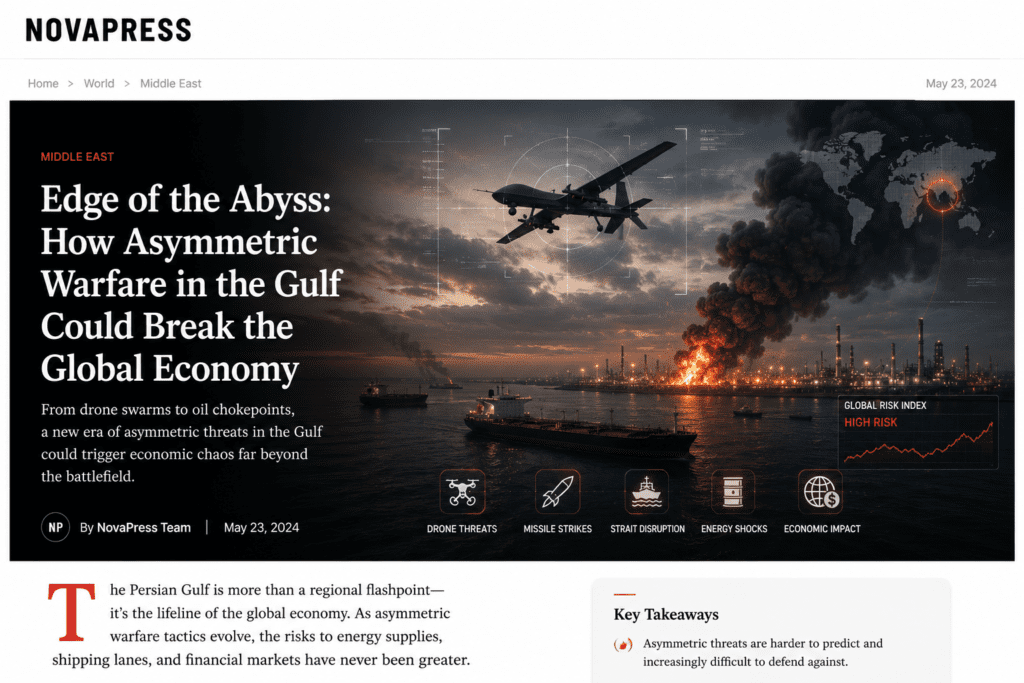
The Chokepoint Crisis: How 2026 US-Iran Tensions Threaten a Global Energy Collapse
The geopolitical friction between Washington and Tehran has escalated from diplomatic rhetoric to advanced asymmetric military posturing, threatening to paralyze the world’s most critical trade route.
SHADOWNET DESK | May 25, 2026
Tensions between the United States and Iran have reached a boiling point once more, casting a dark shadow over global oil and energy markets. Recent close-encounter incidents involving unmanned systems in the Strait of Hormuz—a critical bottleneck for global supply chains—have shifted the market’s fear from “potential disruption” to “imminent threat.” With the complexities of modern asymmetric warfare now in play, the profound impact of this geopolitical flashpoint on global economic stability has never been greater.
SECTION 01: The 20% Bottleneck & The LNG Vulnerability
The Strait of Hormuz is not just a waterway; it is the central artery of the global economy. Approximately 20% of the world’s total petroleum consumption passes through this narrow 21-mile-wide corridor. However, the modern strategic narrative extends far beyond crude oil.
The Strait is the primary exit route for Liquefied Natural Gas (LNG), particularly shipments originating from Qatar. In a world increasingly reliant on LNG to offset coal and pipeline gas shortages, any disruption in Hormuz directly threatens European and Asian energy grids. A blockade, whether physical or psychological, would trigger an immediate supply shock across dual energy markets.
SECTION 02: Asymmetric Warfare & 2026 Military Posturing
The military dynamics in 2026 have evolved significantly from the tanker incidents of 2019. The Persian Gulf is now a theater for advanced asymmetric naval warfare.
- Iranian Capabilities: Tehran has heavily fortified its coastline with next-generation anti-ship cruise missiles (ASCMs), autonomous drone swarms, and fast-attack stealth vessels capable of executing coordinated “wolfpack” tactics.
- US Deterrence: In response, US naval forces and regional allies have deployed advanced electronic warfare (EW) countermeasures and AI-driven maritime surveillance networks to protect commercial shipping lanes.
The margin for error is virtually zero. A single misidentified drone or an accidental engagement between automated defense systems could trigger a chain reaction, forcing commercial insurers to halt all shipping operations through the Gulf.
SECTION 03: The Economic Domino Effect
The volatility in the Strait of Hormuz dictates global inflation rates. When military readiness escalates, so do shipping insurance premiums, which are immediately passed down to consumers.
Market analysts project a terrifying scenario: If the Strait is actively contested or shut down for just 48 to 72 hours, crude oil prices could easily breach the $150 per barrel mark. Such a spike would not only devastate energy-importing nations but also force central banks worldwide to hike interest rates, potentially plunging the global economy into a severe recession.
SCENARIO ASSESSMENT: SHADOWNET Intelligence
| Scenario | Impact Projection | Probability |
|---|---|---|
| Continued Asymmetric Harassment | Periodic spikes in Brent Crude; elevated maritime insurance costs; heightened military readiness without direct war. | 70% |
| Accidental Military Escalation | Direct engagement resulting in vessel damage. Oil surges past $120/bbl; immediate global diplomatic intervention required. | 25% |
| Full Blockade | Strait closure. Oil reaches $150+/bbl. Severe global LNG shortages and cascading market crashes. | 5% |
“The geopolitical fragility of the Strait of Hormuz means that a localized tactical error can result in a global macroeconomic disaster within hours. We are no longer just monitoring ships; we are monitoring the pulse of the global economy.”
— James Mercer, SHADOWNET Analysis
TAGS: #USIranRelations #OilMarkets #GeopoliticalTensions #StraitOfHormuz #MilitaryTech #GlobalEconomy
SOURCES:
1. Reuters — https://www.reuters.com
2. Bloomberg — https://www.bloomberg.com
3. The Wall Street Journal — https://www.wsj.com
4. Financial Times — https://www.ft.com