
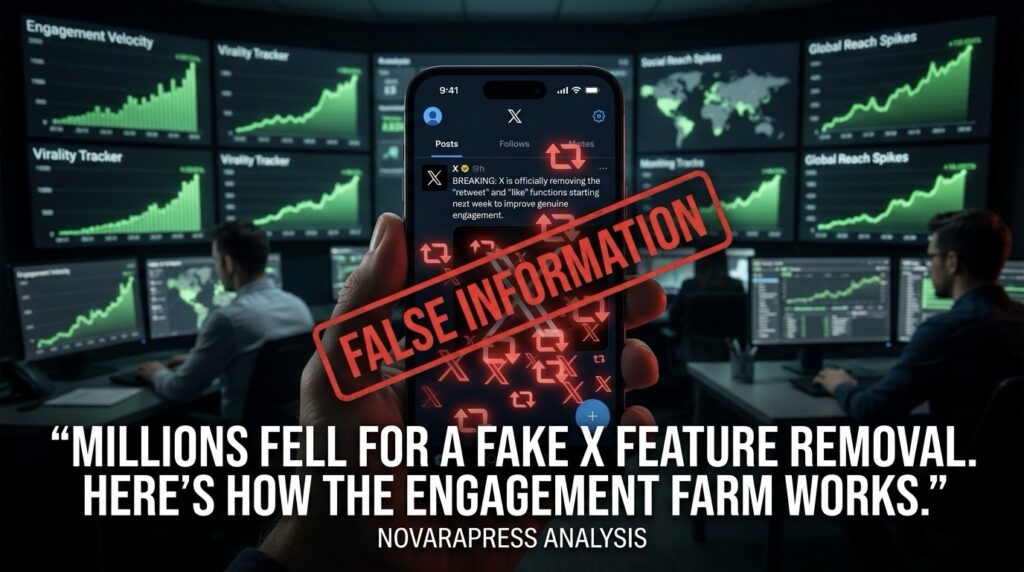
On April 1, 2026, millions of users on X opened the app and encountered a wave of posts claiming the platform had quietly removed one of its most basic features: the ability to copy a video link. Screenshots spread rapidly. Complaints flooded timelines. Users began speculating about whether Elon Musk had moved the feature behind a paywall, or whether it had been replaced entirely with a “Boost Post” button designed to force users to pay for visibility.
Within hours, the claim had reached tens of millions of impressions across X, Instagram, Facebook, and WhatsApp groups. Accounts with blue verification badges — the premium checkmarks that X charges for — were among the most prominent amplifiers. Some posts accumulated over a million views before the day was out.
None of it was true. The feature was never removed. It was an April Fools’ prank — a coordinated engagement-farming operation designed to exploit users’ existing anxieties about X’s unpredictable product decisions and turn those anxieties into viral traffic.
How the Prank Worked
The mechanics were straightforward and effective. Several accounts posted convincing-looking screenshots that showed an X interface without the “Copy Link” option in the share menu. The screenshots were designed to look like genuine UI changes — the kind of unannounced, unexplained feature modifications that X has made repeatedly since Elon Musk acquired the platform in 2022.
That history of real, abrupt changes is what made the prank work. X has previously moved features behind paywalls, removed or renamed functions without notice, and implemented changes that affected users differently across devices and regions. When the “copy video link” claims spread, thousands of users didn’t think to check their own apps first — they assumed the change was real because X had done similar things before.
“You can no longer copy the link of a video anymore on X,” posted one of the original accounts, attaching a screenshot. The post went viral immediately. Responses divided almost evenly between users confirming they could still copy links and users insisting they couldn’t — a pattern that itself drove more engagement as people argued about whether their experience was the norm or the exception.
Community Notes — X’s crowdsourced fact-checking feature — eventually flagged some of the posts as false. One of the accounts behind the prank responded by posting: “Looks like Community Notes does not recognize April 1st as an official holiday.”
The Engagement Farm Behind the Joke
This was not a spontaneous April Fools’ prank. According to reporting by Business Today and Deccan Herald, the campaign was coordinated across multiple accounts with the explicit goal of generating viral reach. Several premium-verified accounts participated, using the credibility signal of their checkmarks to make the false claim appear more authoritative.
The incentive structure is straightforward: X’s creator revenue program pays accounts based on engagement metrics. A post that generates millions of impressions — even one based on false information — produces real income for the accounts behind it. April Fools’ Day provides built-in cover: the prank can be revealed after the engagement has been captured, framing the whole operation as harmless fun.
The result is a system in which misinformation is financially rewarded as long as it can eventually be labeled a joke. The viral reach is real. The revenue is real. The correction — when it comes — never travels as far as the original false claim.
Why This Matters Beyond April Fools
The X video link prank is a small example of a large problem. The techniques it used — convincing screenshots, coordinated amplification, exploitation of users’ prior experience with real platform changes, premium account credibility as false authority — are identical to the techniques used to spread genuinely harmful misinformation.
The difference between a successful April Fools’ engagement farm and a successful health misinformation campaign is not the method. It is the intent and the subject matter. The infrastructure that makes one work makes the other work too.
X’s verification system, which Musk redesigned after acquiring the platform, was explicitly sold as a way to reduce misinformation by identifying credible accounts. In practice, the blue checkmark has become a paid feature that any individual or organization can purchase, regardless of credibility. The prank demonstrated this in real time: premium-verified accounts drove a false claim to millions of impressions on the same day X’s owner was presenting the platform as a venue for serious information and political discourse.
Republic World noted the core vulnerability the prank exposed: “Given the platform’s history of rapid, unannounced changes to core features under Elon Musk’s leadership, thousands of users believed the news without a second thought.” The prank didn’t manufacture distrust in X’s product decisions. It harvested existing distrust that X’s own behavior had already created.
How to Verify Before You Share
The X video link prank was easily verifiable by anyone who checked their own app rather than accepting the screenshot as evidence. The copy link feature remains accessible: tap the share icon below any video, and “Copy Link” appears in the pop-up menu, exactly as it always has.
The broader lesson applies beyond this specific incident. Before sharing any claim about a platform removing or changing a feature, especially on April 1, the first step is to check the feature yourself. The second is to search for confirmation from the platform’s official account or verified press coverage. The third is to notice whether the claim is circulating primarily among accounts that benefit financially from engagement rather than accounts with a track record of accurate reporting.
These steps take thirty seconds. The alternative — sharing a false claim that reaches millions of people before the correction appears — is how engagement farms stay profitable and how genuine misinformation spreads. The April Fools’ label makes this week’s example feel harmless. The method it demonstrated is not.
If this analysis interests you, read next: How Algorithms Decide What You Believe About War